Skip to content
Best Cabinets
Types and materials

Cabinet Styles

Shaker, raised-panel and slab doors, and the difference between traditional, transitional and modern.

Published: September 15, 2026

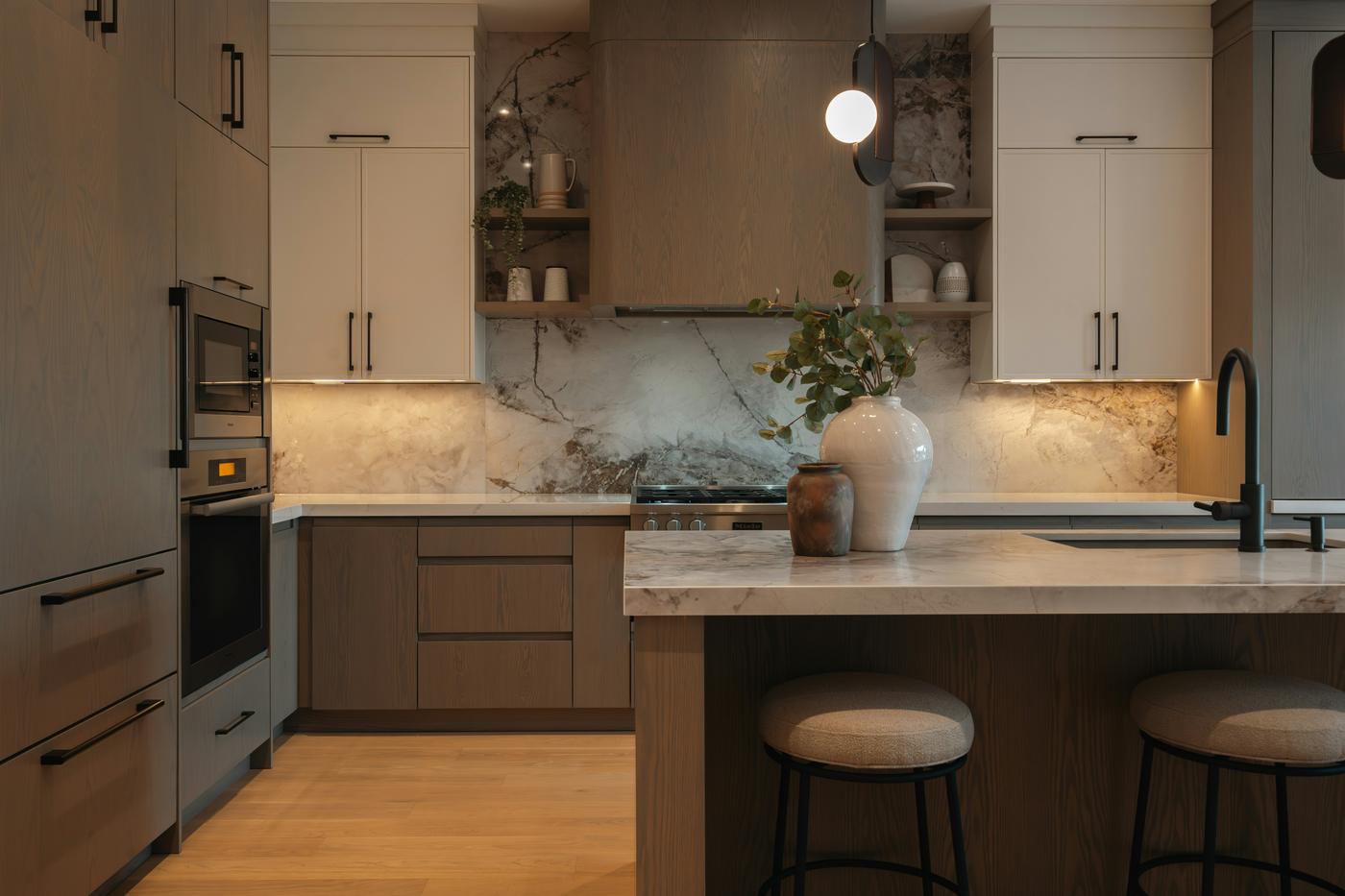
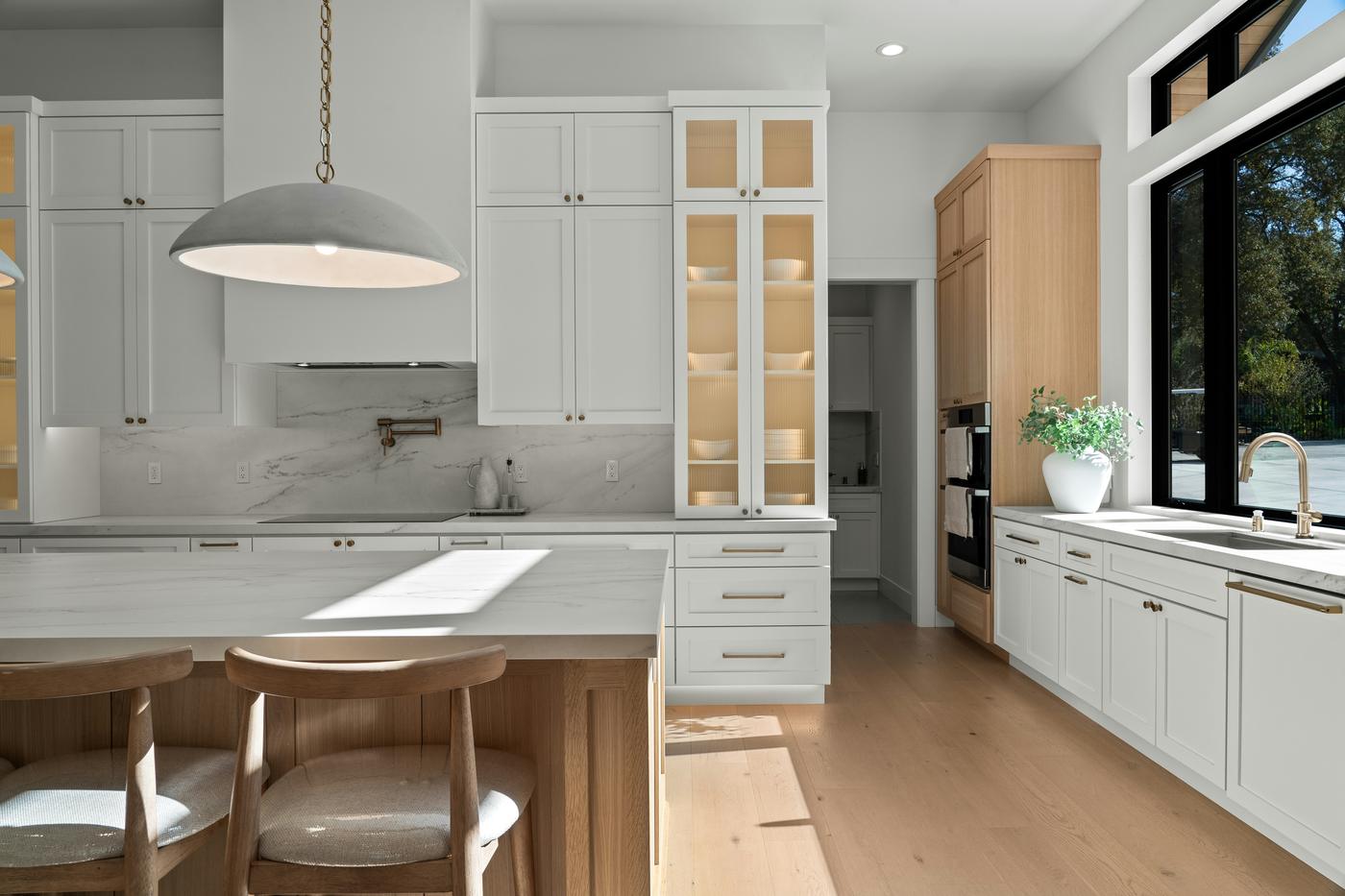
kitchens in three cabinet styles

Door Styles

The door does most of the work. A Shaker door has a flat center panel in a square frame and suits almost any house. Raised-panel doors have a profiled center panel. Slab doors are a single flat panel with no frame.

Traditional, Transitional and Modern

Traditional kitchens use raised-panel or detailed doors, crown molding and furniture-style details. Modern kitchens use slab doors, minimal hardware and clean lines. Transitional kitchens sit between the two, typically with a Shaker door and simple molding.

For custom kitchen cabinets, look at the door profile, proportions and finish together. A familiar style can feel different when the door width, hardware or surrounding millwork changes.

Framed and Frameless

Framed cabinets have a face frame on the front of the box, the usual American construction. Frameless cabinets, sometimes called European style, have no face frame and use full-overlay doors, which gives slightly more interior space and a flatter look.

Find Cabinet Companies Near You

Each company in our city rankings lists the services it offers. Browse all states and cities, or start with Huntsville, Nashville, Atlanta or Tampa.
Recommended Guides

Shaker, raised-panel and slab sample doors
Service guide

Cabinet Doors

Door styles, overlay types, and replacing doors without replacing cabinets. Shaker doors have a flat center panel in a square frame. Raised-panel doors have a profiled center panel and read as traditional. Slab doors are a single flat panel and read as modern. Glass-front doors are used as accents. Full-overlay doors cover nearly all of the cabinet face. Partial-overlay doors leave part of the face frame visible. Inset doors sit inside the frame, flush with it; they need precise fitting and cost more.

Read more
painted and stained finish samples
Types and materials

Cabinet Finishes

Painted, stained and natural finishes, and how each one wears. Painted cabinets give a solid, even color. Paint shows chips and hairline cracks at door joints more than stain does, so ask for a touch-up kit and for the name of the color. Stain adds color while leaving the grain visible; a clear coat alone shows the natural wood. Both hide wear well. Species matters: maple is smooth and even, oak has strong grain, cherry darkens with age, and walnut is naturally dark.

Read more
drawer pulls and hinges on a workbench
Service guide

Cabinet Hardware

Knobs, pulls, hinges and drawer slides, and why the parts you cannot see matter most. Decorative hardware is the easiest part of a kitchen to change. Knobs need one hole; pulls need two at a fixed spacing, so replacements have to match the existing holes unless the doors are being refinished. Choose a size in proportion to the door or drawer. Concealed, soft-close hinges are standard on most new cabinets. Drawer slides matter more: full-extension, soft-close slides let a drawer open completely and carry real weight. Ask which brands a cabinet company uses.

Read more
kitchen with new base and wall cabinets
Service guide

Kitchen Cabinets

Layouts, storage, construction and finishes for the largest cabinet project in most homes. Kitchen cabinets set the layout of the room, so the first decisions are about where things go: sink, range, refrigerator, and the counter space between them. Storage comes next. Drawers in base cabinets hold more usable space than shelves behind doors, and a tall pantry cabinet often replaces several wall cabinets. Settle appliance models before ordering, because cabinet sizes depend on them. If the layout works and the boxes are solid, refacing or repainting can change the look of a kitchen for less than new cabinets. If the layout is changing, or the boxes are sagging, water-damaged or poorly built, replacement is the better investment.

Read more
kitchen floor plan and elevations
Service guide

Cabinet Design

How cabinet layouts are planned, and what a good designer will ask you. Design turns a room's measurements into a cabinet plan: which cabinets go where, in what sizes, with what storage inside. A good plan accounts for appliance clearances, door swings, walkways and how the kitchen is actually used. Many cabinet dealers and custom shops include design in their service; independent kitchen designers charge separately. Expect questions about how you cook, what you store, and what frustrates you about the current room. You should receive a floor plan and elevations before ordering.

Read more
plywood, MDF and solid wood samples
Types and materials

Cabinet Materials

Solid wood, plywood, MDF and particleboard, and what each is used for. Cabinet boxes are usually plywood or particleboard. Plywood is lighter, holds screws well and tolerates moisture better. Particleboard, often faced with melamine, is less expensive and stable when kept dry. Either can make a durable cabinet when it is thick enough and well assembled. Solid hardwood such as maple, oak, cherry, hickory or walnut is standard for stained doors and face frames. MDF is common for painted doors because it is smooth and does not expand and contract the way wood does, so paint is less likely to crack at the joints.

Read more